
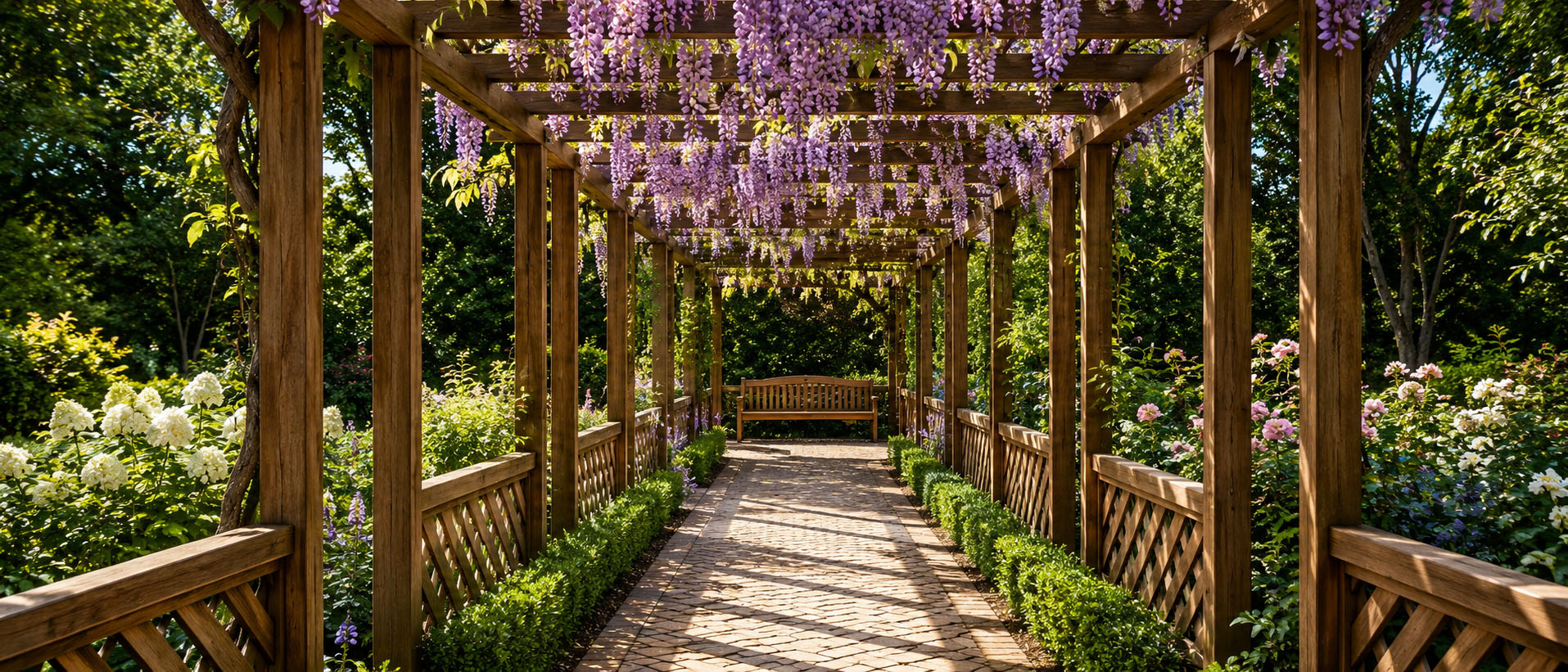
With some important exceptions: no, in most cases, you do not need planning permission for a pergola in the UK, so long as it is at the back of your property and below 2.5 metres in height. However, there are important exceptions relating to location, listed buildings, conservation areas, how much of your garden has already been developed and other factors as explained below.
When a Pergola Usually Does Not Need Planning Permission
A pergola is normally considered an outbuilding or garden structure under UK permitted development rights. As per the Government’s Planning Portal this means that you can generally install one without planning permission if it is:
- For domestic use only
- In the rear garden / back of the property
- Not causing the “original house” to be more than 50% covered by additions or other buildings
- The base is not more than 0.3 m tall
- It is not used as self-contained living accommodation
- The pergola is not positioned in front of the principal elevation of the property
- It is no taller than:
- 2.5m (8.2ft) if within 2m (6.6ft) of a boundary
- 4m (13.1ft) maximum for a dual-pitched roof
- 3m (9.8ft) maximum for any other roof type
Situations Where Planning Permission May Be Required
You may need planning permission for a pergola if:
- The pergola is positioned at the front of the house
- The structure exceeds permitted height limits
- Your property is a listed building
- Your home is located within a conservation area, national park, or AONB
- The pergola includes solid walls or a fully enclosed roof
- The structure is intended for commercial use
- More than 50% of the land around the original house has already been developed with extensions or outbuildings
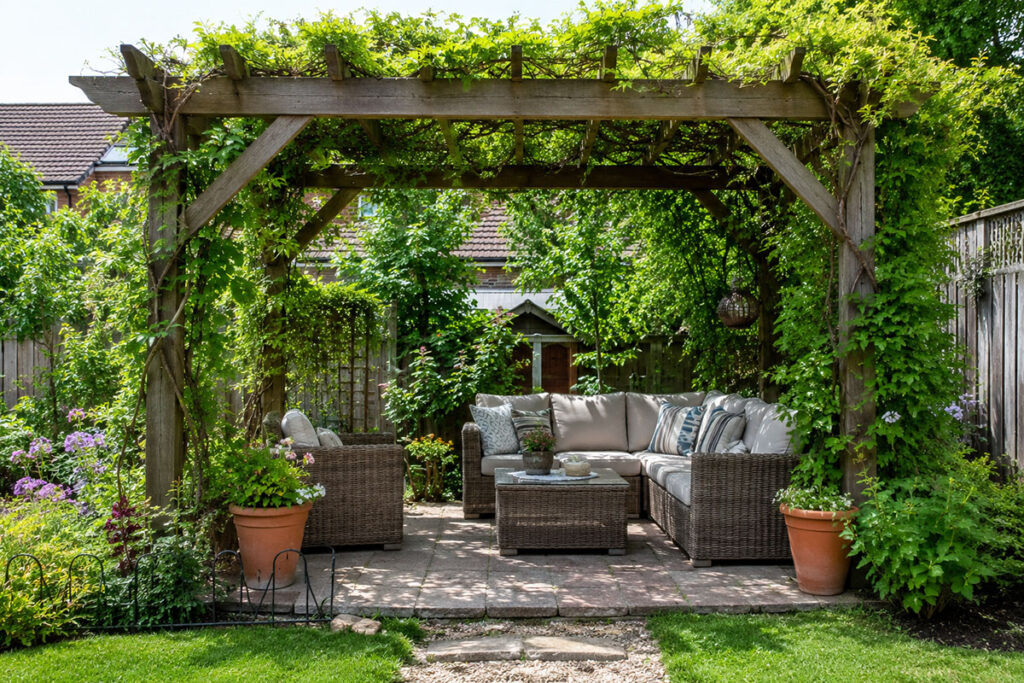
Will a Pergola with a Roof Need Planning Permission?
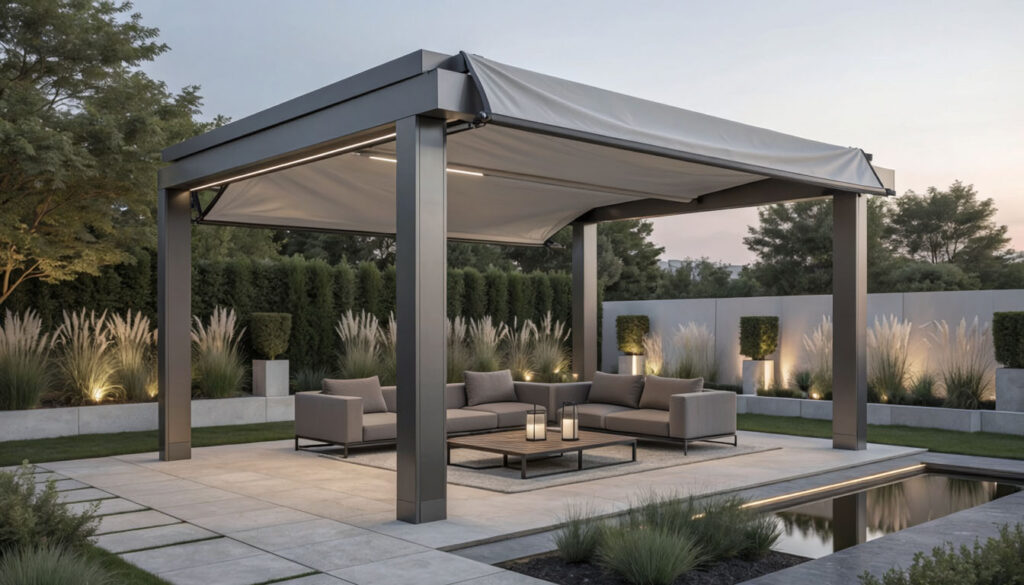
Yes, potentially. An open-roof pergola is usually treated more leniently than a fully covered structure. If you add a solid polycarbonate roof, retractable roof systems, glass roofing, or fully enclosed sides, the structure may begin to resemble a garden room or extension rather than a simple pergola.
Pergola Height Rules Explained
The standard rule is:
- Within 2m (6.6ft) of a boundary then the maximum height is normally 2.5m (8.2ft).
- Always measure from the highest natural ground level next to the pergola.
Do You Need Building Regulations Approval to Install a Pergola?
No, usually not for a standard pergola.
However, building regulations may apply if the structure is substantially enclosed, includes electrical work, has fixed heating, is unusually large or permanent, or is attached structurally to the house.
Pergolas in Conservation Areas and Listed Buildings
If your property is a listed building, you should always check with your local authority before installing a pergola.
Homes in conservation areas, Areas of Outstanding Natural Beauty (AONBs), or national parks may also face tighter restrictions on garden structures.
Quick Checklist Before Installing a Pergola
Before buying or building a pergola, check:
• Your pergola height
• Distance from boundaries
• Whether your home is listed
• Whether you live in a conservation area
• Existing extensions and outbuildings on the property
• Whether the pergola has a fixed or enclosed roof
Frequently Asked Questions
Can neighbours object to a pergola?
Yes, particularly if a pergola affects privacy, blocks light, or appears overly large.
How close can a pergola be to a fence?
If it is within 2m (6.6ft) of the boundary, the maximum permitted height is normally 2.5m (8.2ft).
Is a pergola classed as a permanent structure?
Most pergolas are considered semi-permanent garden structures.
Can I attach a pergola to my house without planning permission?
Often yes, provided it remains within permitted development limits.
The Most Important Thing
While the above is general guidance based on the standard government rules, always check your local authority rules. You can use the Planning Portal to find your local authority and check their specific rules, though it is very unlikely that these will differ from the government’s general rules for something as simple as a pergola.