
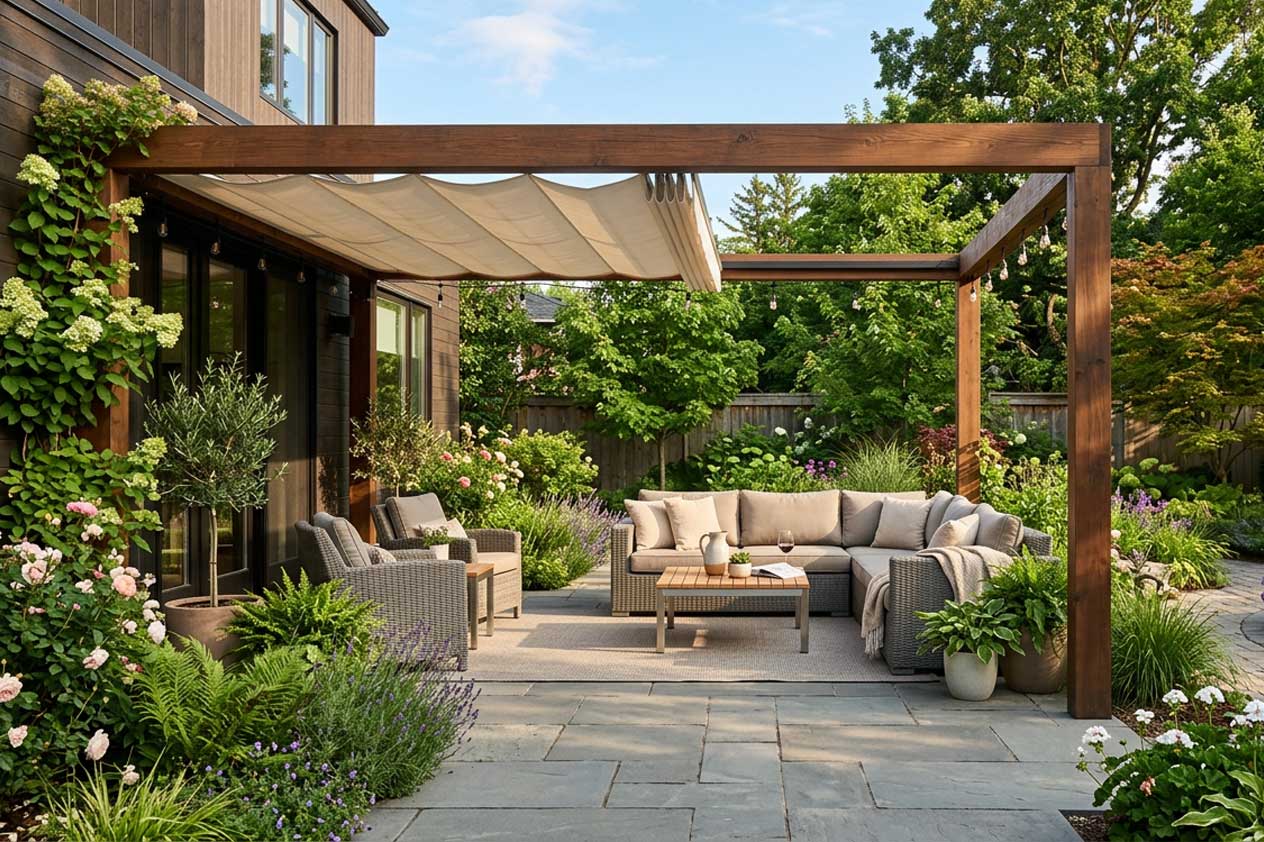
A pergola, canopy and retractable roof can all provide shelter for a commercial outdoor space, but they solve different problems.
A canopy is often best where straightforward, permanent cover is required. A traditional pergola creates an attractive framework for a terrace or seating area but may provide limited protection unless a roof system is added. A retractable roof offers the greatest control, allowing a business to open the space in pleasant weather and close it when conditions change.
For restaurants, hotels, pubs and other hospitality venues seeking to use outdoor areas throughout more of the year, a commercial retractable roof will usually provide the most adaptable solution. The right choice, however, depends on the location, exposure, available space and intended use of the area.
What Is the Difference Between a Pergola, Canopy and Retractable Roof?
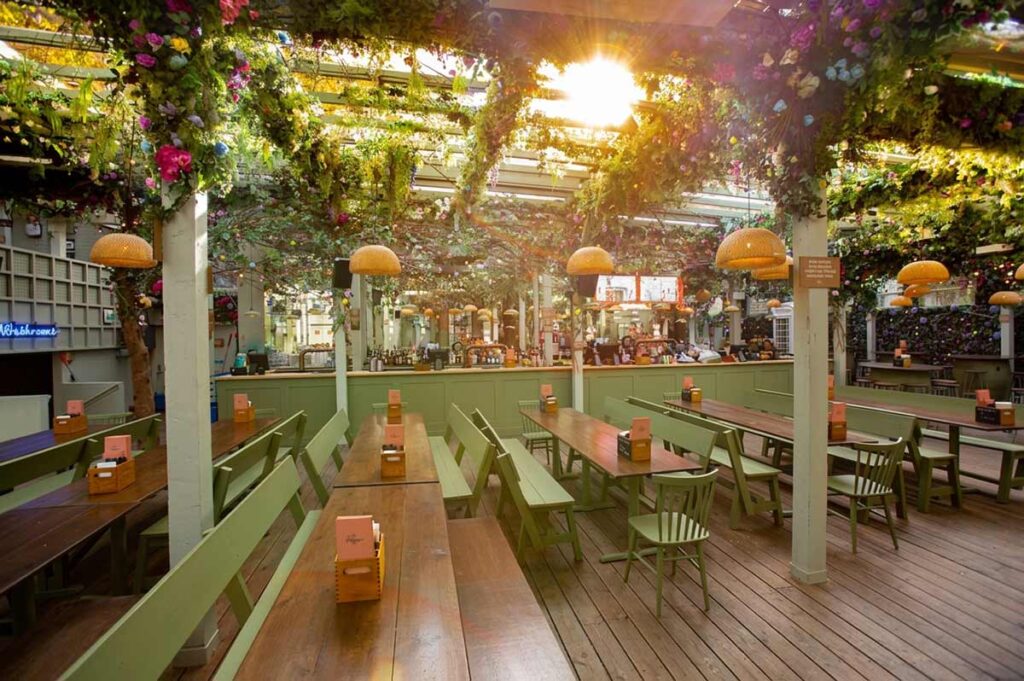
The language surrounding outdoor structures can become confusing because the terms occasionally overlap.
A pergola is primarily a structural framework, usually formed from posts, beams and an open or partially covered roof. Traditional pergolas may use timber or metal beams with gaps between them, providing visual definition and some shade without creating a fully protected room.
Modern pergolas can be considerably more advanced. For example, retractable and tilting louvre roofs use aluminium panels that can tilt, close or retract. This means a modern pergola may also function as a retractable roof rather than simply acting as a decorative frame.
A canopy is a broad term for an overhead covering. It may be fixed to a building or supported by its own posts and is generally intended to provide dependable cover in one defined area. Canopies are commonly used over entrances, walkways, waiting areas, smoking areas and smaller seating zones.
A retractable roof is a movable roof system rather than a particular architectural shape. It may use fabric, aluminium louvres or glass, depending on the required appearance and level of protection. The roof can be opened when the weather is favourable and closed when shade or shelter is needed.
When Is a Commercial Canopy the Right Choice?
A canopy works well when the business needs a clearly defined area of permanent overhead cover.
For example, a fixed canopy may be suitable above a hotel entrance, a pedestrian route or a small pavement seating area. There is no need for customers or staff to operate the roof, and the structure provides consistent shelter throughout the day.
Its main limitation is also its defining feature: it remains in place. A fixed roof may make a terrace darker than necessary on bright days and cannot recreate the feeling of open-air dining. Heat can also collect beneath some designs if ventilation has not been considered carefully.
A canopy therefore makes sense where reliable cover matters more than flexibility. Where the commercial aim is to change the atmosphere of the space throughout the day, a retractable system offers considerably more control.
When Is a Pergola Suitable for a Commercial Space?
A traditional pergola can give an outdoor area structure and visual identity. It can separate a dining terrace from the rest of a garden, create a focal point in a hotel courtyard or provide a framework for planting, lighting and decoration.
However, an open pergola should not be mistaken for an all-weather roof. It may provide partial shade, but customers can still be exposed to rain, low sunlight and wind.
This may be perfectly acceptable for a seasonal garden, decorative courtyard or fair-weather breakout space. It is less suitable where the business is relying on the area to provide dependable dining covers or event capacity.
The distinction becomes more interesting with modern louvred pergolas. The DSS Skyview system, for instance, can provide shade through adjustable louvres, close to form a protected roof or retract to reveal the sky. It can also be combined with heating and side screens, turning the pergola from a simple structure into a far more complete outdoor room.
Why Choose a Retractable Roof?
A retractable roof allows the space to respond to the conditions rather than forcing the venue to accept whatever the weather brings.
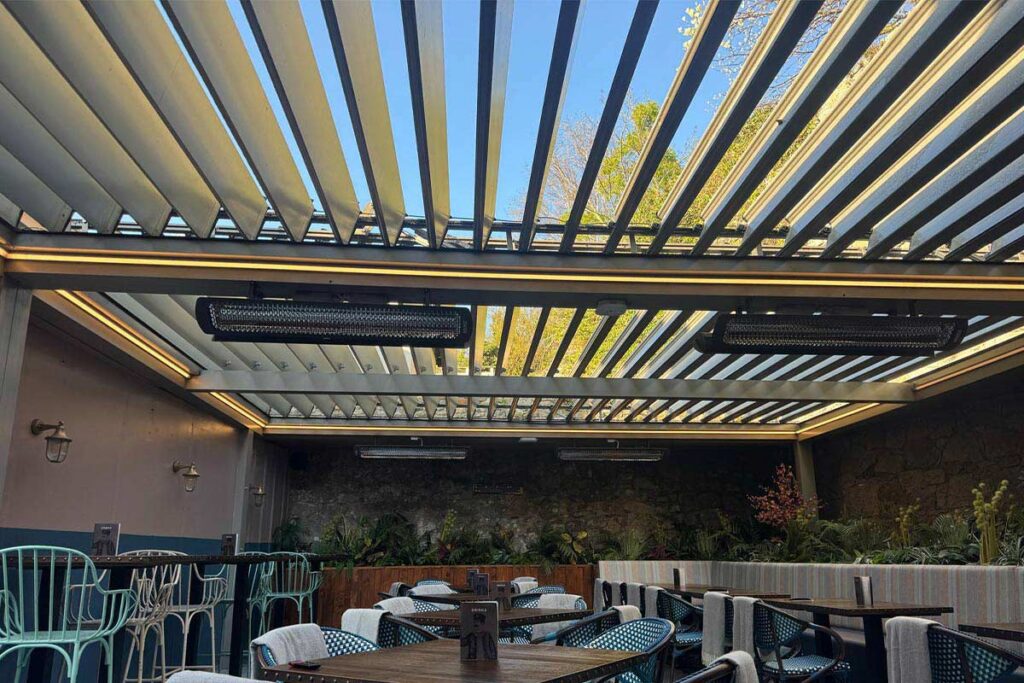
On a clear afternoon, the roof can remain open so that customers receive natural light and fresh air. It can then close when rain arrives or when strong sunlight makes the terrace uncomfortable. In the evening, lighting and heating can help the same area continue operating after temperatures fall.
Designer Shade Solutions supplies several forms of commercial retractable roof.
Retractable fabric roof systems are particularly suitable for extensive terraces and hospitality areas. They can be installed as independent structures, incorporated into a wider architectural design or linked together to cover larger spaces. Optional heating, lighting and vertical glass can provide further protection.
Retractable louvre roofs provide more precise control over sunlight and ventilation. The aluminium panels can be tilted for shade, closed for cover or retracted where the design permits. They are well suited to contemporary restaurants, hotels, rooftop terraces and outdoor kitchens.
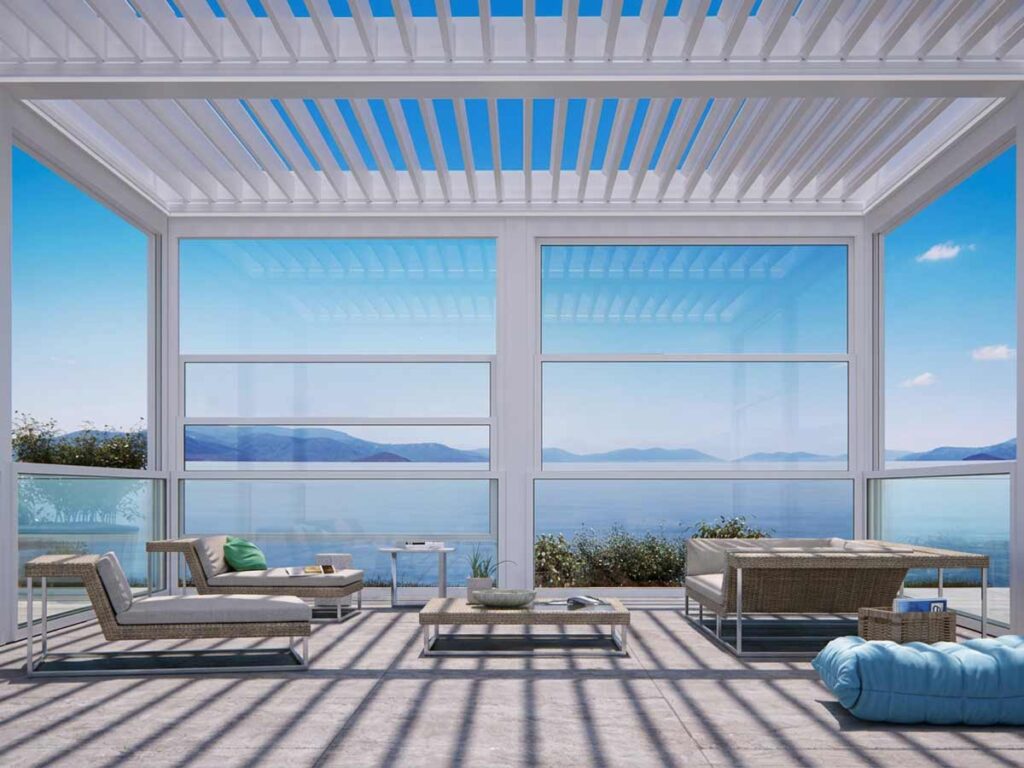
Retractable glass roofs are appropriate where natural light and panoramic views are central to the design. They can turn terraces, courtyards and rooftop spaces into protected areas while preserving a strong connection with the surroundings. DSS glass systems are available with motorised operation, different glazing specifications and integration with weather sensors and automated controls.
Which Option Provides the Best Weather Protection?
The answer depends on the complete installation, not simply the material above it.
A roof may stop rain falling directly onto a table, but an exposed terrace can still become uncomfortable when wind enters from the sides. Drainage, guttering, structural loading, orientation and the position of surrounding buildings must all be considered.
For greater protection, a retractable roof can be combined with vertical glass systems, blinds or other side enclosures. Heating and integrated lighting can then make the area more practical during colder mornings and evenings.
This is where a designed commercial system differs from placing a simple cover above an existing patio. The roof, structure, drainage, controls and surrounding enclosure need to work together.
Which Is Best for Restaurants, Hotels and Pubs?
For a small entrance or waiting area, a fixed canopy may be sufficient. For a decorative seasonal terrace, a traditional pergola may provide the required appearance without the cost or complexity of a moving roof.
Where outdoor seating forms part of the venue’s capacity, a retractable roof is generally the stronger commercial choice. It preserves the open-air character that attracts customers while allowing the business to react when the weather changes.
The Lost in Brixton project shows how this can work at scale. Designer Shade Solutions incorporated 150 square metres of opening roof systems into the venue’s custom structure, including large portals that could be opened to the sky. The result allows the bar to feel open during suitable weather and more protected during colder or wetter periods.
Other completed installations can be viewed in the Designer Shade Solutions commercial and residential case studies.
Do Pergolas and Retractable Roofs Need Planning Permission?
Planning requirements depend on the property, location, scale and proposed use of the structure. Commercial projects should be assessed individually, particularly where the property is listed, lies within a conservation area or involves a rooftop or prominent external alteration.
The Planning Portal advises contacting the relevant local planning authority where there is uncertainty. Domestic permitted development rules should not be assumed to apply to a commercial venue.
Our guide to planning permission for pergolas and retractable roofs provides a useful starting point, although project-specific advice may still be required.
Choosing the Right Commercial Roof System
The best system is the one that supports how the space will actually be used.
A canopy may provide simple, permanent shelter. A pergola can create an attractive architectural feature. A retractable roof can turn a weather-dependent terrace into a controlled environment that opens and closes with the day.
Designer Shade Solutions has more than 20 years of experience designing and installing bespoke commercial shade and all-weather systems. Our team includes designers, engineers and project managers who can assess the site, intended use and architectural requirements before recommending a suitable fabric, louvre or glass solution.
To discuss an outdoor dining area, hotel terrace, pub garden or commercial development, contact Designer Shade Solutions to arrange a survey and begin developing the right system for the space.