
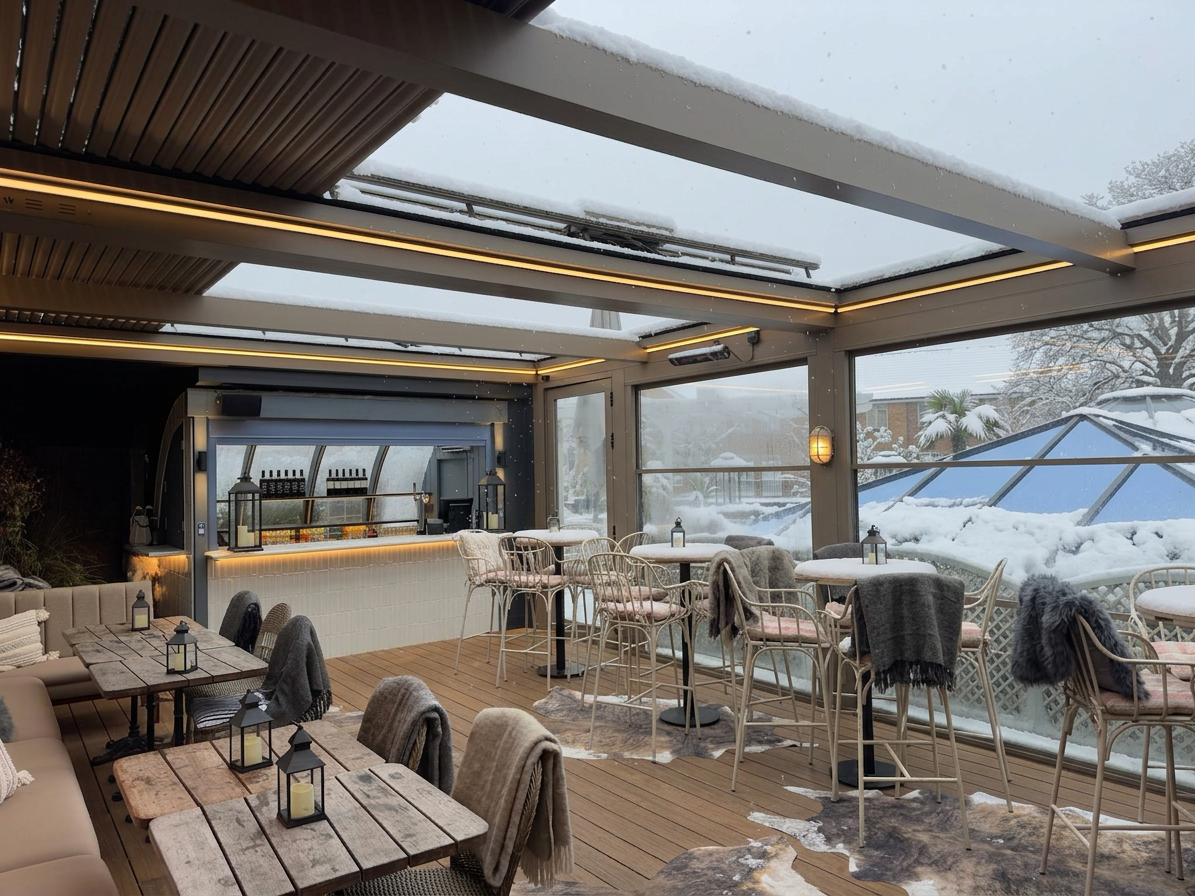
A well-designed commercial retractable roof can provide dependable protection from wind, rain and winter weather, but its performance depends on far more than the material overhead.
The roof system, supporting structure, foundations, fixings, drainage, automation and surrounding enclosure must all be specified for the site. A sheltered restaurant courtyard will face different pressures from a rooftop bar, coastal hotel or exposed pub garden.
There is therefore no universal wind or snow rating that applies to every retractable roof. The correct specification should reflect the location, dimensions and intended use of the space, as well as the operating limits of the chosen system.
Can Commercial Retractable Roofs Withstand Strong Wind?
Commercial retractable roofs can be designed for windy locations, although no responsible supplier should describe every system as simply “windproof”.
Wind does not affect every site in the same way. The height of the structure, surrounding buildings, roof shape, local topography and direction of exposure can all change the pressure placed on the roof and its supporting frame. Rooftop terraces and open coastal sites will generally require closer assessment than enclosed courtyards.
The government’s Approved Document A covers structural loading and the construction of roofs, foundations and other structural elements. British and European structural standards also address wind actions and snow loads as separate design considerations. This is why commercial systems should be assessed as engineered structures rather than treated as oversized garden awnings.
Designer Shade Solutions’ retractable and tilting louvre roofs use robust aluminium structures and can be configured for exposed commercial settings. The available systems include framed, frameless and pitched options, with the final structure designed around the dimensions and requirements of the project.
Does a Retractable Roof Need to Be Open or Closed in High Winds?
The correct position during strong winds depends on the roof type and its manufacturer’s instructions.
A retractable fabric system may need to be retracted when wind conditions exceed its operating limit. An adjustable louvre roof may need its blades opened, tilted or retracted to reduce pressure. A glass roof may have a different operating procedure again.
This distinction matters because weather sensors cannot make a roof stronger. They can detect changing conditions and trigger a programmed response, but the response itself must be appropriate for the particular system.
Designer Shade Solutions can integrate automated controls that react to sun, rain and wind. On a commercial site, this can reduce reliance on a staff member noticing a sudden change in the weather and operating the roof manually. The controls should still be set according to the system specification rather than using one rule for every roof.
How Do Retractable Roofs Perform in Heavy Rain?
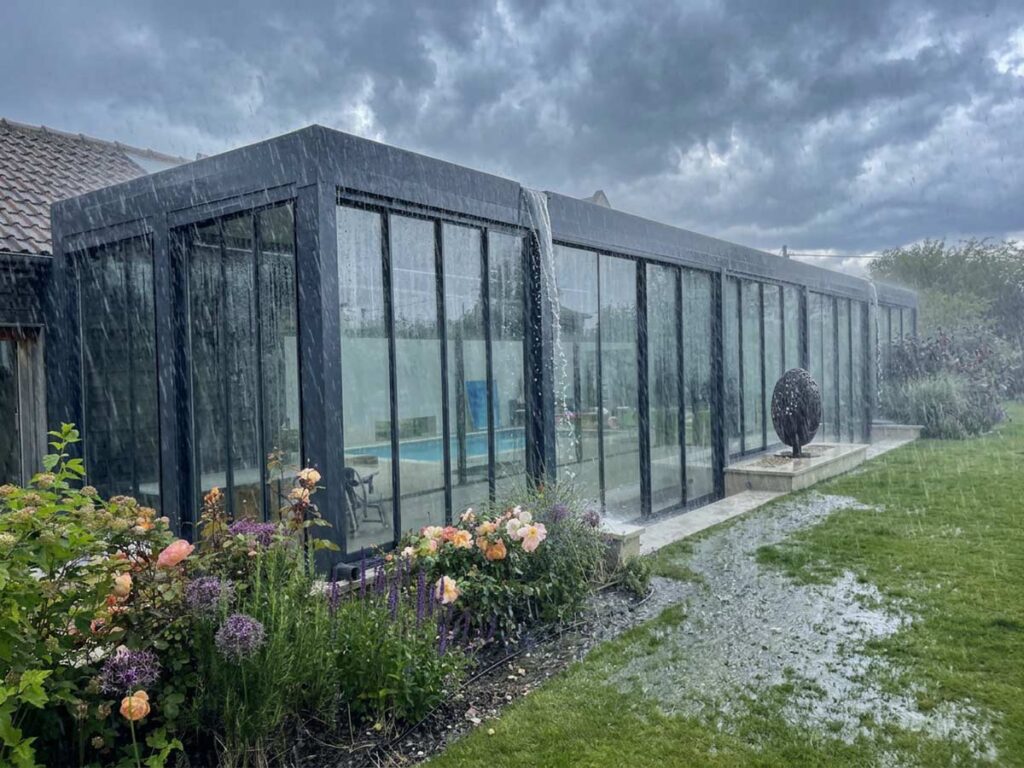
A properly specified retractable roof can keep a commercial terrace usable during prolonged rain, but effective rain protection involves both the roof surface and the route taken by the water afterwards.
On a louvred roof, the aluminium blades close to form a protected overhead surface. Rainwater is then directed into integrated gutters and away through designated drainage channels. Some systems conceal the drainage within the supporting structure, helping to preserve a clean architectural finish.
Our guide to whether a waterproof retractable pergola can withstand heavy rain explains why sealing, drainage design and correct installation are central to performance. Even a high-quality roof can overflow if leaves or debris obstruct its gutters during a downpour.
A pitched system can provide an especially clear route for rainwater. The angle encourages water to move towards the drainage point rather than remaining on the roof, while the retractable section can still be opened during suitable weather.
Are Fabric, Louvre or Glass Roofs Better in Rain?
Each material can provide effective rain protection when used within a suitable engineered system.
Fabric retractable roof awnings are often selected for large restaurant terraces, event spaces and hospitality courtyards. Tensioned waterproof fabric can cover a substantial area without creating the visual weight of a solid roof. Fabric also tends to produce a softer sound during rainfall than aluminium or glass.
Louvre roofs provide more control over shade and ventilation. The blades can be adjusted during warm weather and closed when rain arrives. Their integrated gutter systems make them a strong choice for commercial spaces requiring regular movement between open-air and covered use.
Retractable glass roofs provide a more enclosed architectural solution. DSS systems can offer water- and airtight protection, motorised opening and high levels of thermal performance while preserving natural light and outward views. They are particularly appropriate for hotels, restaurants, atriums and premium rooftop venues.
The best material is therefore not determined by rain alone. Appearance, span, insulation, acoustics, ventilation and the desired degree of enclosure must also be considered.
What About Wind-Driven Rain?
Rain rarely falls perfectly vertically during a storm. Wind can push it beneath open sides or carry it beyond the edge of an otherwise effective roof.
For this reason, covering the top of a terrace does not automatically create a fully protected commercial room. The position of the roof, prevailing wind direction and surrounding walls must be examined as part of the design.
A roof can be combined with vertical glass systems or fabric screens to reduce wind and rain entering from the sides. Vertical glass is particularly useful where a restaurant or hotel wants greater protection without losing views or making the area feel permanently closed.
Side enclosures also alter how wind moves around the structure, however. They should be included in the original structural assessment rather than added later without considering the additional pressure they may create.
Can Retractable Roofs Withstand Snow?
Some retractable roofs can be engineered for snow loading, but snow should never be treated as harmless because it appears light while falling.
Accumulated snow adds sustained weight to the roof, frame and fixings. Wet or compacted snow can place considerably more strain on a structure than a brief rain shower. The permissible load will vary between products and installations, so the system’s technical documentation and operating guidance must take priority.
Designer Shade Solutions’ advice on winterising a retractable roof or pergola recommends preventing heavy accumulation, clearing snow promptly and keeping gutters and tracks unobstructed. For some louvre systems, opening the blades during snowfall may help stop snow building up across a closed roof.
Certain retractable glass systems are designed with high resistance to wind and snow, but that does not mean every glass roof carries the same load. Span, glazing, frame specification and structural support must all be checked for the individual project.
How Important Are Foundations and Fixings?
A roof is only as dependable as the structure holding it in place.
Posts, wall connections, brackets, foundations and ground fixings transfer weather loads away from the roof. If those elements are unsuitable, the performance of the roof covering itself becomes largely irrelevant.
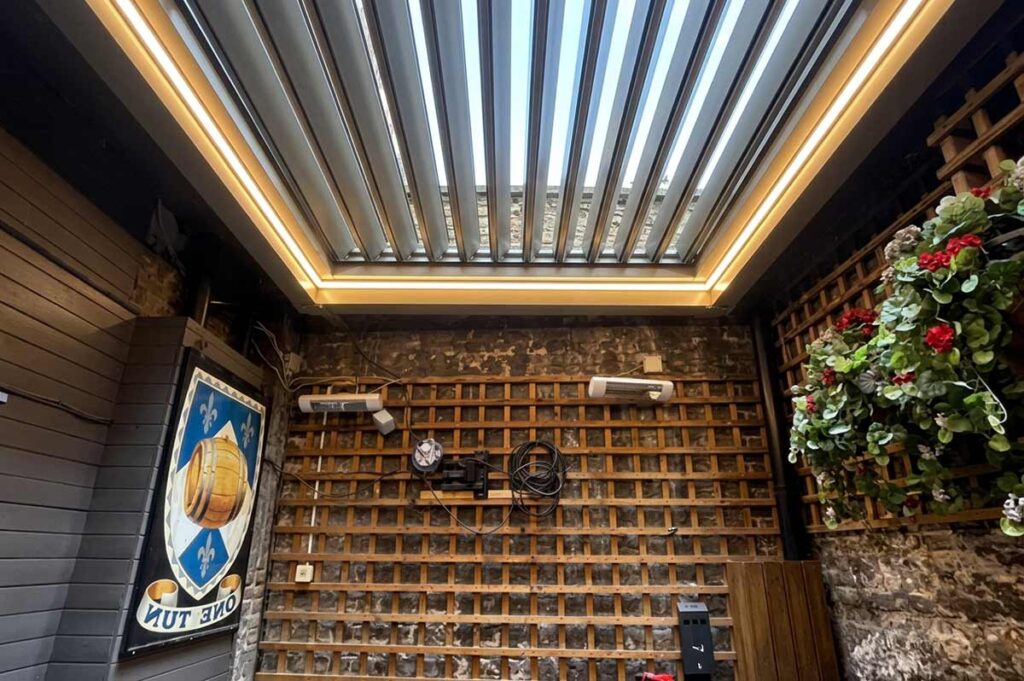
This is particularly important where a system is suspended from an existing building or fitted into an irregular space. At the One Tun Pub in Hatton Garden, DSS created custom brackets of different sizes so that a retractable louvre roof could be installed within the pub’s unusual courtyard.
Commercial projects may also need coordination with architects, structural engineers, contractors and local building control. Early assessment prevents the roof design reaching site only for the existing wall, foundations or drainage arrangement to prove unsuitable.
Does Maintenance Affect Weather Performance?
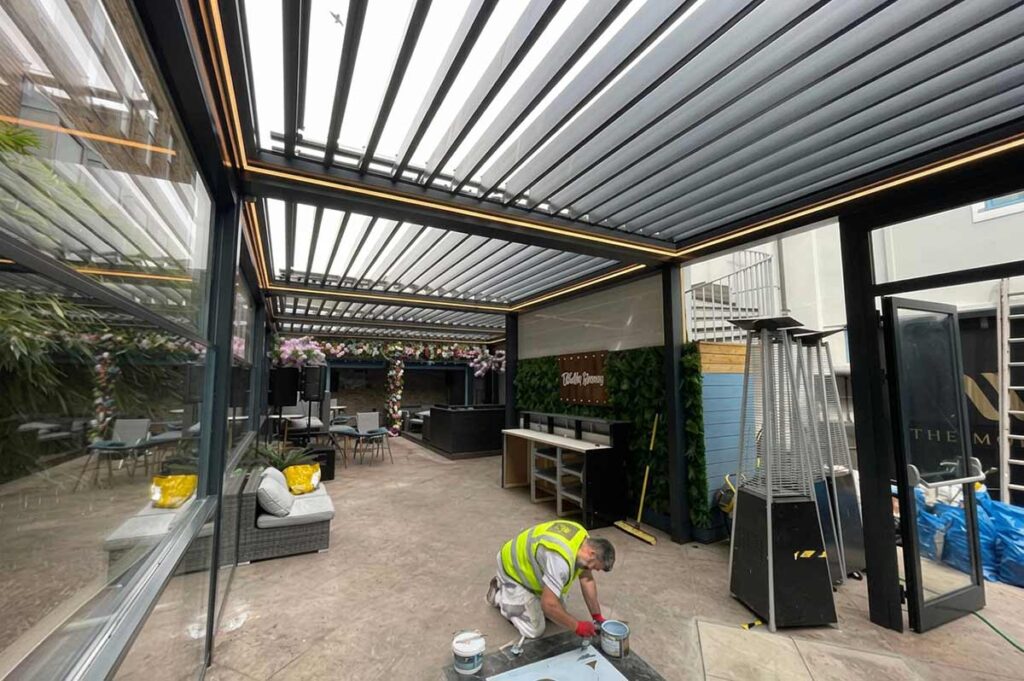
Even an engineered roof requires regular attention.
Gutters and drainage outlets must remain clear. Tracks, motors and moving components should be checked. Seals, fabric and fixings should be inspected for damage, particularly after severe weather or prolonged periods of heavy use.
The Designer Shade Solutions retractable roof maintenance guide recommends routine cleaning, removal of debris and periodic inspection of the frame, gutters and operating mechanisms. Maintenance requirements will vary according to the system, environment and frequency of use.
For a hospitality venue, planned maintenance is preferable to discovering a blocked gutter above occupied dining tables during the first serious storm of autumn.
Choosing a Commercial Retractable Roof for an Exposed Site
A commercial retractable roof can provide effective protection from wind, heavy rain and winter weather, but performance must be designed into the project from the beginning.
The right questions are not simply whether a roof is waterproof or wind resistant. A business should ask what conditions the complete system has been designed for, how rainwater will leave the site, what its operating limits are and how it should be positioned when severe weather is forecast.
Designer Shade Solutions has more than 20 years of experience creating retractable fabric, aluminium and glass systems for commercial and residential properties. Our in-house team can assess the exposure, structure, drainage and intended use of the space before recommending an appropriate solution.
To discuss a restaurant terrace, hotel courtyard, pub garden or rooftop project, contact Designer Shade Solutions to arrange a survey and explore the systems suitable for your site.