
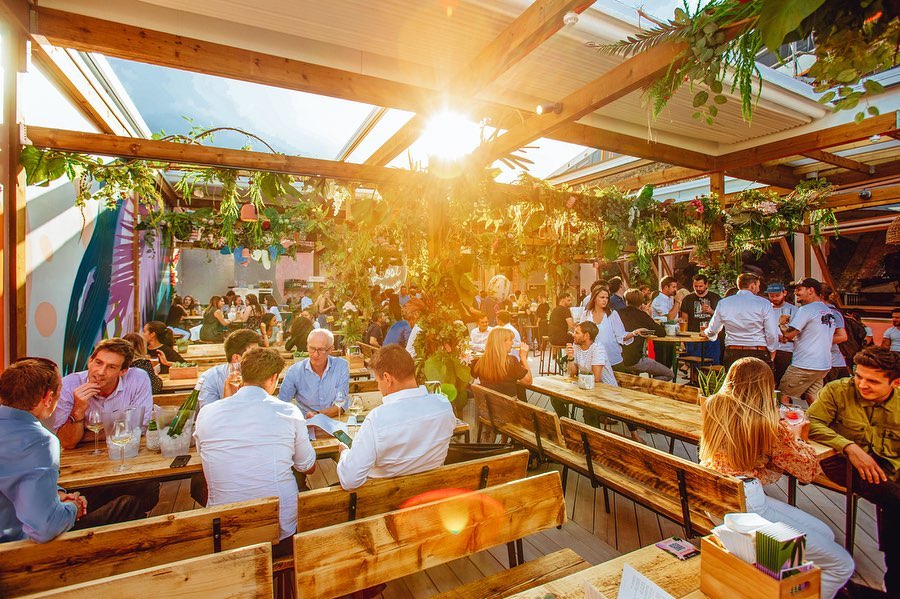
Can a Bioclimatic Pergola Help Restaurants Use Outdoor Seating in Wet Weather?
Yes, a commercial bioclimatic pergola can help restaurants make outdoor seating more usable in wet, windy or changeable weather by giving customers adjustable overhead cover, ventilation and shade. For UK hospitality venues, that can turn a terrace, courtyard or pavement seating area into a more reliable part of the trading space.
What is a bioclimatic pergola?
A bioclimatic pergola is an outdoor roof system with adjustable louvres that can be tilted, opened or closed to manage sunlight, shade, airflow and rain protection.
Unlike a traditional open pergola, a bioclimatic system is designed to respond to the conditions around it. On hot days, the louvres can be angled to create shade while allowing warm air to escape. During light rain, the roof can be closed to give customers more protection. Depending on the system, it may also be combined with side screens, glazing, lighting, heating and automated controls.
For hospitality venues, the main advantage is flexibility. A restaurant does not have to choose between a fully open terrace and a permanently enclosed structure. A bioclimatic pergola allows the space to be adapted throughout the day.
Designer Shade Solutions offers retractable and tilting louvre roofs for modern pergolas that can adapt to different installation locations, including hospitality-style outdoor spaces.
Is a bioclimatic pergola rain-proof?
A bioclimatic pergola can provide strong protection from rain, but it is better to describe it as weather-resistant rather than completely rain-proof.
This is an important wording distinction. A closed louvred roof can help protect diners from rainfall, especially when the system is professionally specified with drainage. However, exposed sides, wind direction, storm intensity and the layout of the terrace all affect how dry and comfortable the space feels.
For that reason, the strongest hospitality setups often combine:
- Adjustable louvred roof cover
- Integrated drainage
- Vertical glass or side screens
- Heating for cooler evenings
- Lighting for evening service
- Wind and rain sensors where appropriate
Where wind exposure is a concern, vertical glass systems can help make an outdoor area feel more enclosed without removing the view.
Why does weather protection matter so much for UK restaurants?
Weather protection matters because outdoor tables only generate value when customers are comfortable enough to use them.
Outdoor dining can increase capacity, improve atmosphere and make a venue feel more appealing during spring and summer. But in the UK, that opportunity is often limited by sudden rain, glare, wind or temperature changes.
This is where a commercial pergola becomes more than a design feature. It helps protect the value of outdoor covers by reducing the number of times a restaurant has to close, avoid seating or move customers inside.
The Met Office has reported recent UK seasonal records for heat and sunshine, alongside strong regional rainfall contrasts. For hospitality venues, that points to a practical need for outdoor spaces that can adapt to both sun and sudden weather changes.
Can a pergola help protect restaurant revenue?
Yes, a pergola can help protect revenue by making outdoor covers more dependable during uncertain weather.
It should not be framed as guaranteed “revenue insurance”, because no outdoor structure can control bookings, demand or severe weather. But the underlying idea is sound: if a restaurant has outdoor tables, those tables are only commercially useful when they can actually be occupied.
A commercial bioclimatic pergola can support revenue by helping restaurants:
- Keep more outdoor tables usable during showers
- Reduce last-minute disruption to terrace bookings
- Improve customer comfort during hot or bright conditions
- Extend lunch, evening and shoulder-season use
- Create a more premium outdoor dining experience
- Make better use of courtyards, patios, terraces and pavement seating
For venues comparing different options, the wider range of commercial shade solutions can help frame the pergola as one part of a broader outdoor dining strategy.
Do restaurants need permission for outdoor seating?
Restaurants may need permission depending on where the seating is placed, especially if tables, chairs or structures are on public pavement.
For pavement seating in England, hospitality businesses should check local pavement licence requirements before installing or expanding an outdoor dining area. GOV.UK guidance explains that pavement licences relate to removable furniture on relevant highways adjacent to premises used for food and drink service.
This does not mean every pergola project follows the same route. A private courtyard, rooftop terrace, garden, car park or public pavement area may involve different rules. Restaurants should check with their local authority, landlord and planning adviser before committing to a permanent or semi-permanent installation.
What features should restaurants look for in a commercial pergola?
Restaurants should look for a pergola system that manages rain, shade, airflow, lighting and customer comfort together.
A basic cover may help with shade, but a hospitality-grade system needs to work around service, staff movement, guest comfort and the look of the venue.
Useful features include:
- Adjustable louvres for shade, ventilation and rain response
- Retractable roof options for open-air dining when the weather is good
- Side glazing or screens to reduce wind exposure
- Integrated drainage to manage rainfall
- Lighting for evening covers
- Heating for cooler spring and autumn trade
- Automation for easier operation during busy service
- Bespoke design to suit the building frontage, terrace or courtyard
Some venues may also suit retractable fabric roof system awnings, particularly where the aim is flexible shade and shelter over a larger hospitality area.
For proof of fit in real spaces, link naturally to hospitality shade projects or relevant case studies later in the article.
Is a bioclimatic pergola worth it for UK restaurants?
A bioclimatic pergola is worth considering if a restaurant already has outdoor space but loses trade because of rain, sun, wind or inconsistent comfort.
It is most useful for venues where outdoor seating is not just decorative, but commercially important. That might include restaurants with courtyards, hotel terraces, rooftop bars, pub gardens, waterfront seating, high street pavement covers or destination dining spaces.
The strongest return is likely to come where the pergola helps the venue:
- Add usable covers without extending the building
- Improve the customer experience
- Reduce weather-related cancellations or table moves
- Make outdoor seating feel intentional rather than temporary
- Create a more premium-looking frontage
- Extend trading beyond only warm, dry days
For restaurants, the best question is not just “how much does a pergola cost?” It is “how often would this space be used if customers were protected from the worst of the weather?”
Key takeaway
A commercial bioclimatic pergola can help UK restaurants make outdoor seating more reliable, comfortable and commercially useful. It is not literal rain-proof revenue insurance, but it can act as practical revenue protection by helping outdoor covers stay usable through more of the British spring, summer and autumn. For restaurants that already have a terrace, courtyard, beer garden or pavement seating area, the right pergola system can turn unpredictable outdoor space into a stronger part of the customer experience.