
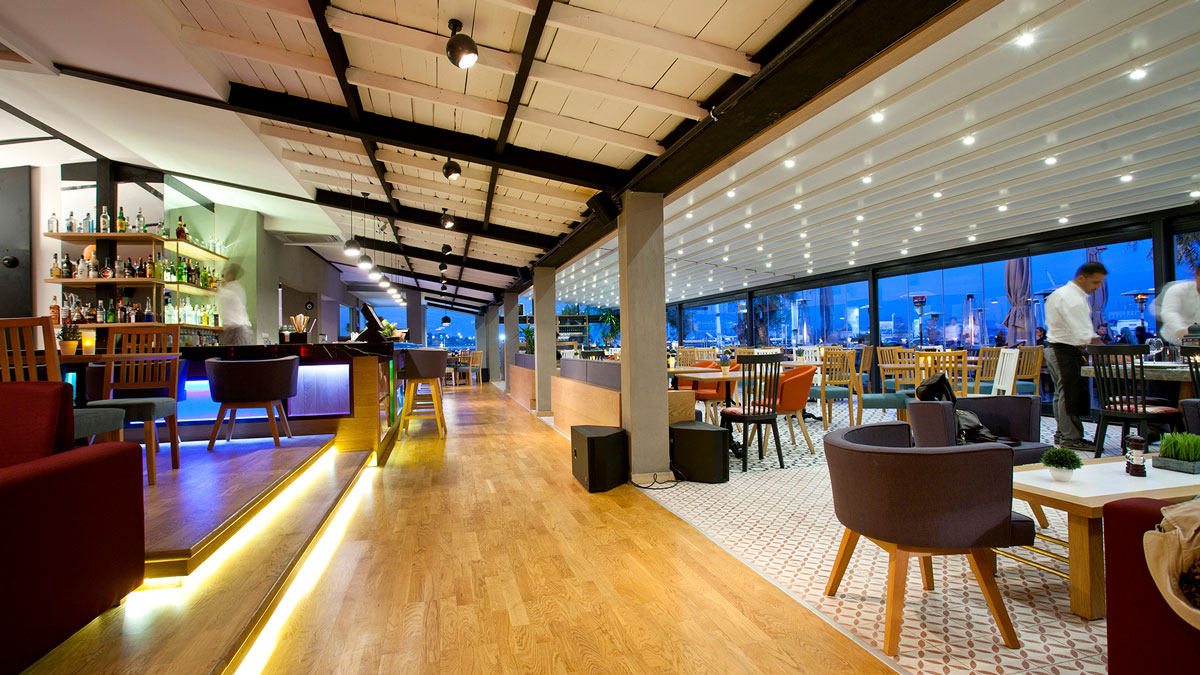
Fabric roof awnings are a popular choice for creating flexible outdoor spaces – but one of the most common questions is whether they are truly waterproof or simply water-resistant. The answer depends on the quality of the system, the fabric used, and how the structure is designed.
Understanding Water-Resistant vs Waterproof
At a basic level, most standard awnings are water-resistant, meaning they can repel light rain for a short period. However, during prolonged or heavy rainfall, water can eventually seep through the fabric or begin to pool.
In contrast, high-quality systems – like modern retractable fabric roof structures – are designed to be fully waterproof when installed and operated correctly. These systems use tensioned, coated fabrics that prevent water penetration and actively channel rainwater away from the surface.
How Modern Fabric Roof Systems Achieve Waterproofing
Unlike traditional awnings, Designer Shade Solutions’ retractable fabric roof systems are engineered for performance as well as aesthetics. The fabric is held under tension across a structured aluminium framework, creating a smooth surface that allows rainwater to run off efficiently.
When the system is fully extended, the fabric forms a sealed covering that protects the space below from rain. The roof is designed to close quickly and evenly, ensuring no sagging areas where water could collect. This is a key difference compared to older or lower-spec awnings.
In addition, the robust aluminium structure provides stability, even in more challenging weather conditions, helping maintain the integrity of the waterproof covering.
Built for the UK Climate
These systems are specifically designed to cope with changing UK weather conditions. Whether installed in a residential garden or a commercial setting such as a café, restaurant, or hotel, they provide reliable shelter while maintaining a modern, high-end appearance.
Their ability to offer both thermal comfort and rain protection makes them a practical solution for year-round outdoor use. When paired with side screens and heating, they can create a fully functional outdoor room that remains usable regardless of the weather.
Flexibility and Smart Operation
One of the biggest advantages of retractable fabric systems is flexibility. At the touch of a button, the roof can be opened to enjoy sunlight or closed to provide instant protection from rain.
Many systems also feature radio-controlled motors and optional weather automation, allowing the awning to respond automatically to changing conditions. This ensures the space remains protected without constant manual adjustment.
More Than Just Shelter
Beyond weather protection, these systems add visual appeal and value to a property. Their clean lines and modern finish make them a strong alternative to traditional awnings, while their modular design allows them to be installed as standalone structures or integrated into bespoke architectural designs.
Available in a wide range of RAL colours and with options such as LED lighting, sliding glass systems, and heating, they can be tailored to suit both residential and commercial environments.
Fabric Roof Systems vs Traditional Awnings
| Feature | Retractable Fabric Roof System | Traditional Fabric Awning |
| Waterproofing | Fully waterproof when tensioned and closed | Typically water-resistant only |
| Rain Performance | Designed to handle sustained rainfall | Suitable for light showers only |
| Structure | Aluminium frame with tensioned fabric | Lightweight arms and fabric cover |
| Wind Resistance | High, due to structural support | Limited in stronger winds |
| Automation | Motorised with optional weather sensors | Manual or basic motorised options |
| Use Case | Year-round outdoor living | Occasional shade and light rain cover |
| Customisation | Lighting, heating, glass, RAL colours | Limited options |
Frequently Asked Questions
1. Can fabric awnings be used in heavy rain without damage?
High-quality retractable fabric roof systems are designed to handle heavy rain when fully extended and correctly installed. However, lower-grade awnings may struggle under sustained rainfall, especially if water begins to pool on the surface.
2. Do fabric roof systems fade or degrade over time?
Modern coated fabrics are designed to be UV-resistant and durable. While some natural ageing can occur over many years, premium systems are built to retain their colour and performance with minimal fading when properly maintained.
3. Can these systems be installed on existing patios or structures?
Yes, retractable fabric roof systems can often be installed onto existing patios or integrated into current structures. They can also be configured as freestanding units, making them suitable for a wide range of outdoor layouts.
Final Verdict
So, are fabric awnings truly waterproof or just water-resistant? Standard awnings are typically water-resistant, but modern retractable fabric roof systems can be fully waterproof when properly designed and installed.
If you’re looking for a reliable, stylish, and flexible solution for outdoor living, investing in a high-quality system at Designer Shade Solutions ensures you benefit from true all-weather performance – not just occasional protection from light showers.